

Clearing an apartment after a death is one of the hardest tasks relatives must take on. Alongside grief and pain come legal deadlines, bureaucratic tasks and the emotional challenge of sorting the belongings of a loved person. This guide offers orientation in a difficult time.
First steps after the death
Immediately after the death it is important to stay calm and prioritise the urgent administrative tasks. First secure the apartment: keys should remain only with reliable heirs or relatives, to prevent unauthorised access. Inform the landlord or property management as soon as possible of the death so that the tenancy can be regulated. Take care of the death notification at the civil registry office and, if needed, apply for death certificates – several copies are often needed for banks, insurers and authorities. Get support: relatives, neighbours or professional offices can take on important tasks in the first days.
Deadlines and tenancy law: what applies after a death?
Under Swiss tenancy law (Art. 267a CO) the tenancy first passes to the heirs on the tenant's death. They are, however, entitled to terminate the tenancy extraordinarily to the next possible statutory date. The statutory minimum notice period for residential premises is three months, unless the lease provides a shorter period. During this period rent continues and must be borne by the heirs. It is advisable to propose a replacement tenant as quickly as possible in order to minimise rent costs.
Securing valuables: what must be watched?
Before the actual clearance begins, all valuables should be viewed and documented: jewellery, cash, art objects, documents, savings books and securities. These items belong to the estate and may not be removed or distributed unilaterally until the community of heirs or the will regulates this. If inheritance relations are unclear, an estate administrator or notary can be involved. All finds should be documented in writing and photographically. Important documents such as the will, insurance policies, leases and bank statements must be secured.
Professional clearance: when does it make sense?
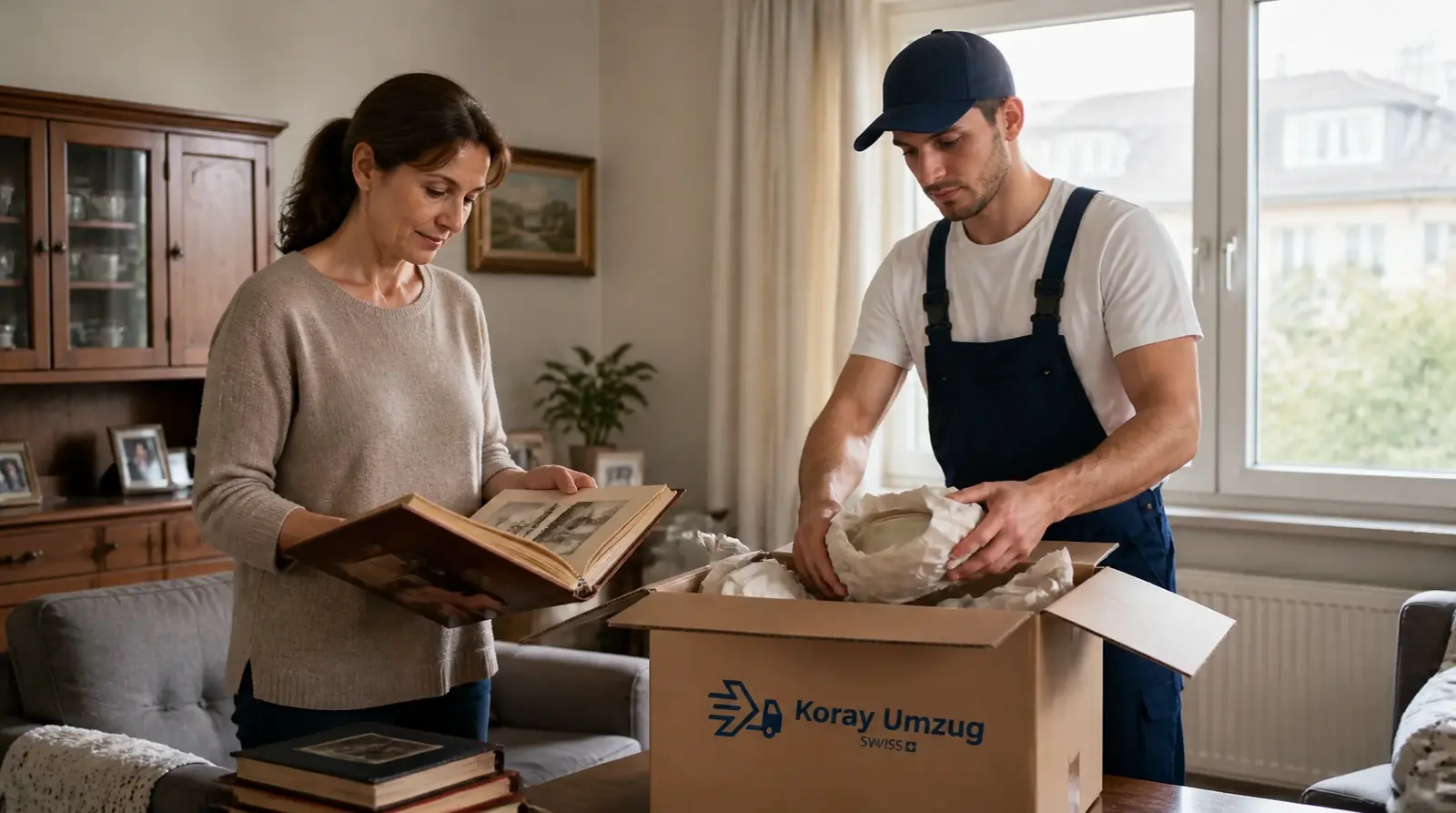
If the heirs are not able to carry out the clearance themselves – whether from grief, lack of time or because of the size of the apartment – a professional clearance firm is a great help. Specialist companies take on sorting, collection, disposal and, where relevant, the final clean of the apartment. Many firms also offer to identify valuable or saleable items and treat them separately. Obtain quotes from several providers and clarify the exact scope in advance. A professional clearance gives relatives the chance to concentrate on what matters.
Costs of apartment clearance: who pays?
The costs of apartment clearance are in principle paid from the estate. If there is no estate or it is over-indebted, the heirs can renounce the inheritance, in which case the costs must be borne by the canton. Costs for a professional clearance vary by scope and apartment size: an average 3-room apartment can cost CHF 1'500–4'000. Final clean, disposal fees and any repair costs in the apartment come on top. Make sure you document all costs, as these can be relevant in a division of the estate.
Frequently Asked Questions
By when must the apartment be cleared after a death?
That depends on the lease and the notice given. Heirs have the right to terminate extraordinarily; the statutory minimum period of three months also applies here. Rent continues until the keys are handed back.
Must heirs continue to pay the rent of the deceased person's apartment?
Yes, as long as the tenancy exists, the heirs must pay the rent. It is advisable to give notice or find a replacement tenant as soon as possible in order to minimise ongoing costs.
What happens if nobody accepts the inheritance?
If all heirs renounce the inheritance, the estate falls to the canton, which is then responsible for winding it up – including the apartment clearance. Enquire at the inheritance office of your canton.
Can inheritance disputes delay the apartment clearance?
Yes, ongoing inheritance disputes can delay clearance considerably, as items can be part of the disputed estate. In such cases an estate administrator or notary can take on neutral coordination.
May relatives take items from the apartment before the estate is settled?
No, items from the estate may only be removed after the estate has been divided or with the consent of all co-heirs. Unilateral action can have legal consequences.